
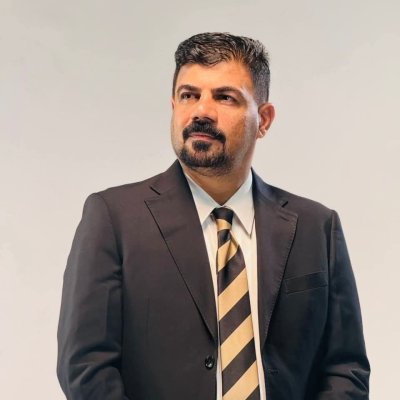
MP Abdulhamza Munaam Alwan Obeid Al-Khafaji
New Member- Coalition -
- Party Idrak Movement
- Committee Regions, Governorates Not Incorporated into a Region, Planning, Government Program and Endowments
Personal Information
No supervision data available
0
Supervision3
Legislation0
Attendance0
Absence / On Leave11
ActivitiesHeld the Council Presidency responsible for confronting the government's monopolisation of decisions; revealed a 25% deduction from the salaries of Ministry of Industry employees by a decision contrary to the law and the Constitution; and warned that three months had passed without accomplished work and that the Council's paralysis would become a burden on it rather than on the bloc leaders (with one intervention)
Called for granting the Strategic Planning Committee two weeks to study the government programme; warned of corruption suspicions surrounding ministers whose renomination is being discussed and called for resolving them with the Integrity Commission; and called for presenting the Security and Defense Committee's report on the targeting of Dr. Dhurgham and the demonstrations. (discussion with four interventions)
Demanded doing justice to the daily-wage workers in the departments and guaranteeing their rights, and called for cancelling the Ministry of Trade's decision withholding the ration card from employees' families.
Denounced the return of assassination gangs using silenced weapons in Babil to terrorize activists, and condemned the rampant corruption and the governorate councils' disregard for MPs' requests. (Discussion with 3 interventions)
Stressed the need to define the relationship with the Region through parliament and apply the law, demanded domiciling the Region's employees' salaries to free them, and called on the Ministry of Oil to recover the illegally exploited pipeline and subsidize generator fuel.
Denounced the continued corruption at the crossings, warning that the added taxes (reaching 30%) will lead to economic stagnation and unemployment, and demanded activating real parliamentary oversight, referring corruption files to the judiciary without political cover, and restricting exemptions.